


Aryan Khan’s “The Ba*ds of Bollywood”: A Playbook for Seamless Brand Integration
Aryan Khan’s Netflix debut doesn’t just satirize the movie business; it quietly rewrites the rules of brand storytelling on streaming. Instead of pausing the plot to “show the product”, The Ba*ds of Bollywood folds brands into character, setting, and satire so naturally that the integrations feel like world-building rather than ads.
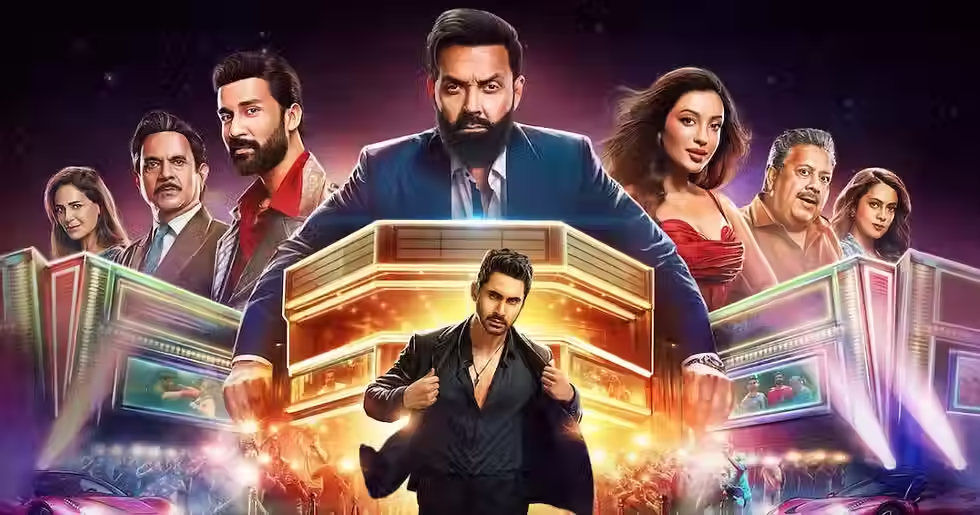
Here’s a deep dive into how the show pulls it off, and why it sets a new benchmark for Indian entertainment:
The Integration Thesis: Story First, Brand Second
The series treats brands as texture: awards with sponsors, parties with partners, groceries on a dinner table, and bottles on a bar that reveal something about the people drinking them. That restraint is the magic. The audience isn’t told to notice; they just do.
The Bold Placements(that still feel organic)
1) Fictional awards with real sponsors: A running gag in the series’ awards culture gets a real-world wink when BKT Tires turns up as the title sponsor of a fictional show. It’s clever because the joke lands even if you don’t clock the brand, and it becomes an extra grin if you do. Coverage of the series’ brand canvas repeatedly highlights BKT’s role anchoring an in-universe event, illustrating how sponsorship can double as satire.
2) Party scenes that behave like the industry: The show’s “success party” isn’t just set dressing: it’s co-presented by Coca-Cola alongside D’Yavol (Aryan Khan’s own spirits label), mirroring how real premieres and post-launch bashes are underwritten. That partnership is documented in campaign coverage that calls out Coke x D’Yavol as event partners, again, a naturalistic fit for the world the show is skewering.
3) Mother Dairy as lived-in realism: Instead of a hero holding a milk carton to the camera, Mother Dairy products just exist on a dinner table and in everyday scenes. Trade press confirms a formal integration deal with Red Chillies Entertainment/Netflix timed to the global premiere on September 18, 2025, executed in a way that reads like life, not an ad break.
4) D’Yavol Spirits as character shading (not just a cameo): Because D’Yavol is actually part of Aryan Khan’s portfolio, its presence could’ve felt indulgent. Instead, it’s used sparingly and wittily, covering multiple appearances, including a kinetic beat where bottles become props in a scuffle. It’s a brand, but it’s also choreography, mood, and character. Trade and industry outlets also connect the dots to D’Yavol’s new distribution muscle via Radico Khaitan, evidence that screen time is backed by a real commercial story.

The Meta Layer: A Brand Builder for the Creator, Too


Aryan Khan’s decision to thread D’Yavol into the show isn’t just clever scripting; it’s a masterclass in creator-commerce. With investor backing and category expansion reported in business media, the on-screen visibility functions like credibility theater: it signals taste, world, and target audience without hammering a sales pitch.
Overcrowding: Too many labels can feel like a supermarket aisle. Here, placements are spaced and purposeful.
Perceived self-promotion: The D’Yavol cameos could’ve backfired. They don’t, because the show uses them for tone and action, not just logo time.
Breaking immersion: The integrations hug the script’s logic; nothing feels teleported in.
Smart, because it trusts viewers. The brands enrich the universe without hijacking it, and the satire stays front and center. When the credits roll, you remember the characters, the chaos, and only then, the logos you spotted along the way. That’s the litmus test of true brand storytelling.
Comments